

Maryland Just Rewrote the Real Estate Rules. Here's What Changed.
On Oct. 1, a batch of new Maryland real estate laws quietly took effect. No ribbon cuttings, no confetti. But if you're buying, selling, inheriting or renting out a home anywhere from Bethesda to Bel Air, a few of these change the math. One of them gets a buyer's deposit back in about half the time. Another lets you pass your house to your kids without sending it through probate.
Here's what changed, what it means county by county, and the one thing I'd do about it this month.
What Happened: The New Maryland Real Estate Laws That Took Effect Oct. 1
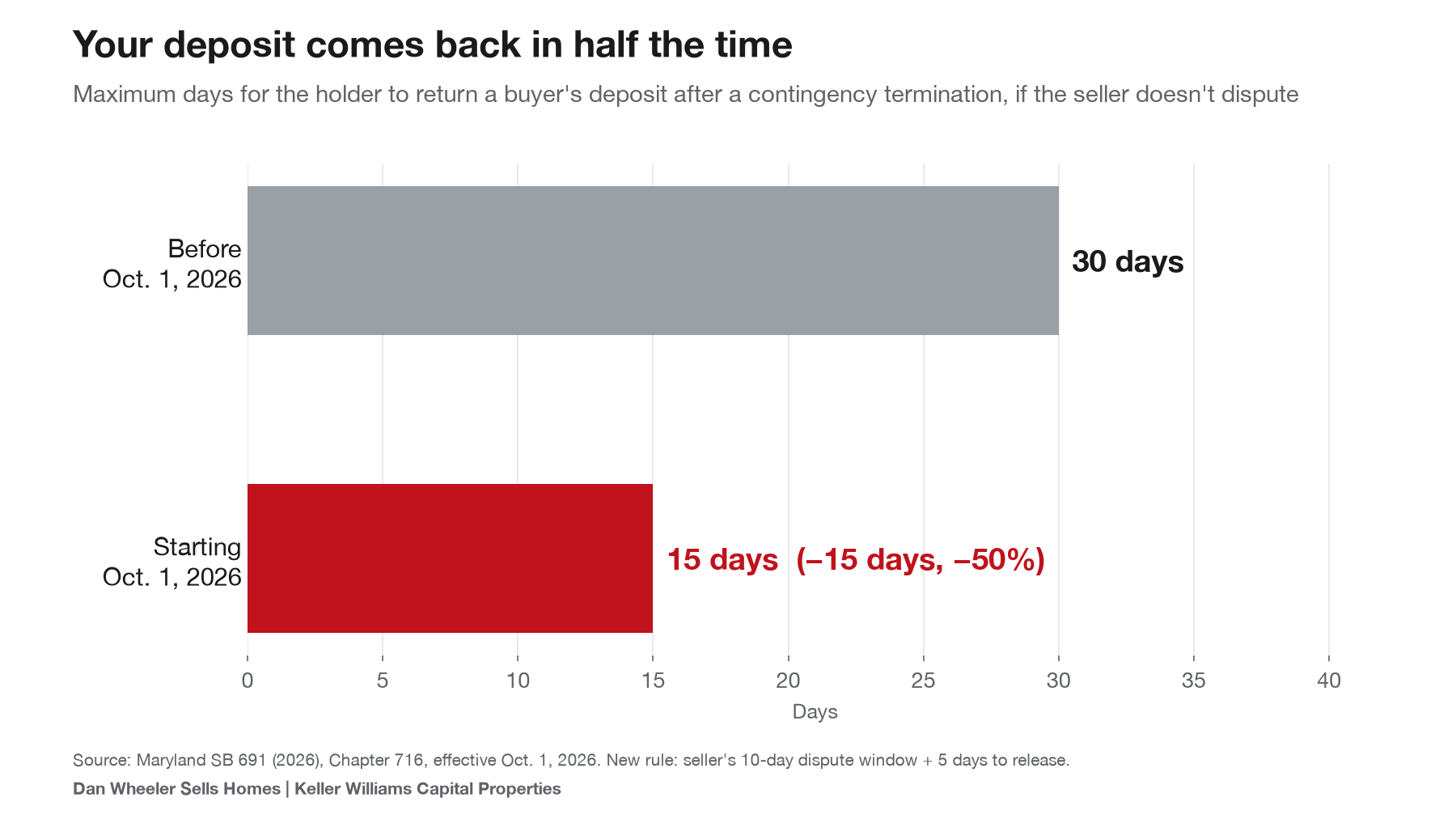
1. Deposits come back faster. Under SB 691 (Chapter 716), when a buyer cancels under a contingency and asks for the deposit back, the seller still has 10 days to file in District Court or request mediation. If the seller does neither, whoever holds the deposit now has to release it within 5 days after that 10-day window closes. The old deadline was 30 days. The law also drops a 15-item list of specific contingency types (inspections, appraisals, HOA documents and so on) and uses one general definition instead.
2. Transfer-on-death deeds are now legal in Maryland. SB 651 / HB 738 (Chapter 750) lets a homeowner record a deed that names who gets the house at death. You keep full ownership while you're alive, and the property passes outside probate.
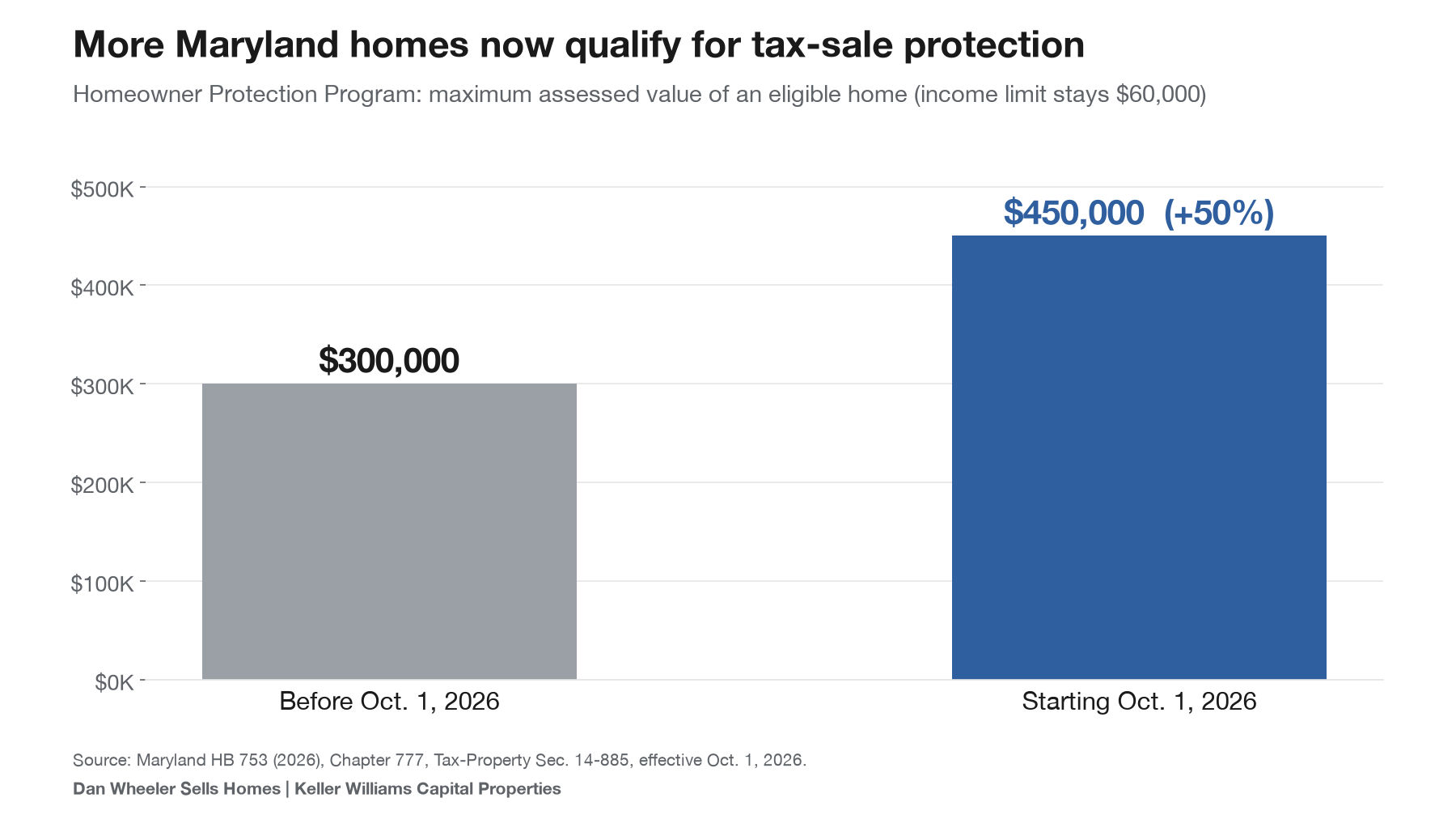
3. More homeowners are protected from tax sale. HB 753 (Chapter 777) raises the assessed-value limit for the state's Homeowner Protection Program from $300,000 to $450,000. The income limit stays at $60,000 or less. Counties must also withhold a home from tax sale when the owner has a documented terminal illness or medical hardship.
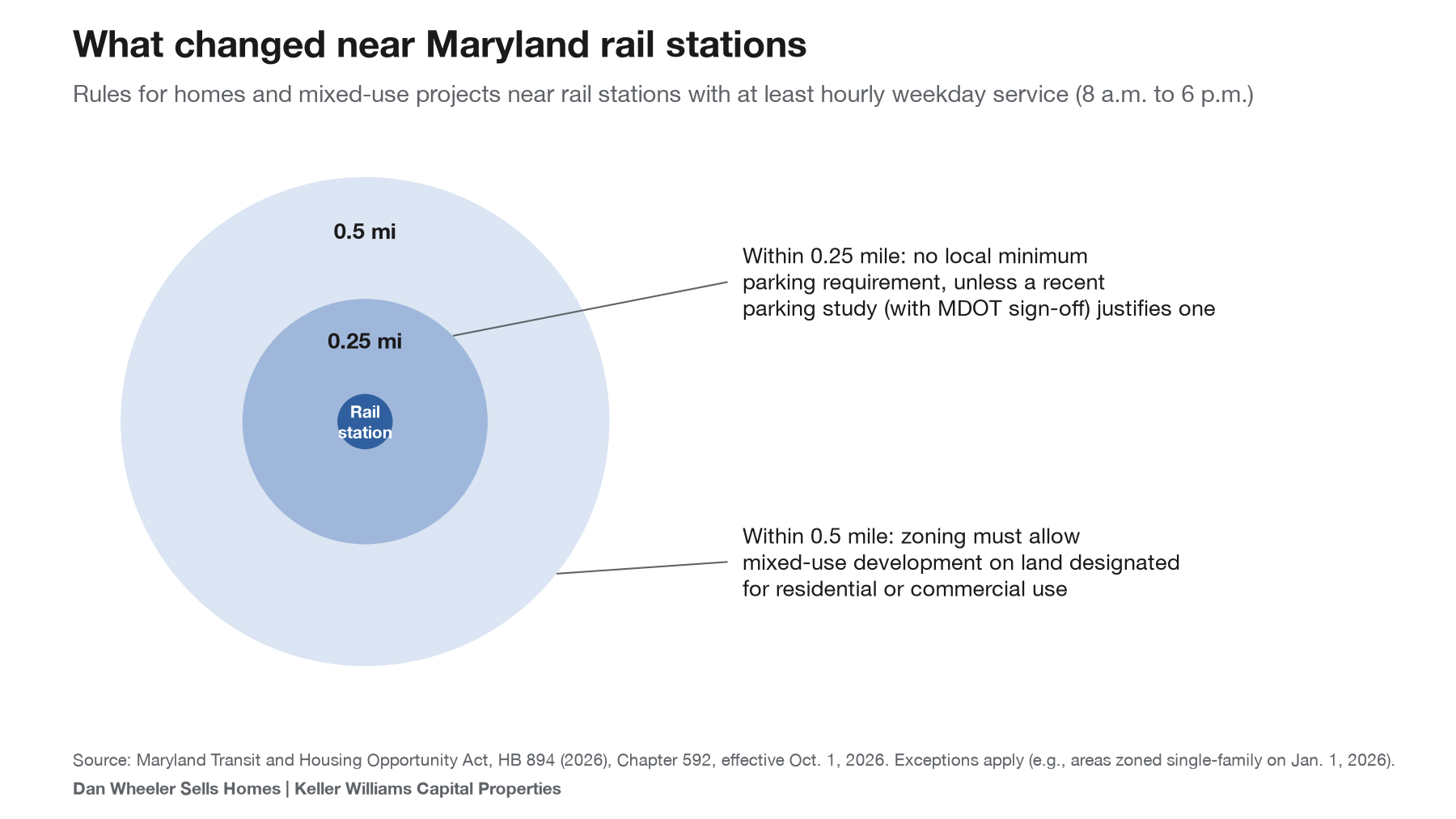
4. Building near transit and getting permits got more predictable. The Transit and Housing Opportunity Act (HB 894) generally bars local parking minimums for homes and mixed-use projects within a quarter mile of a rail station with at least hourly weekday service. It also requires zoning to allow mixed-use development within a half mile. The Housing Certainty Act (SB 325 / HB 548) locks in the rules in effect when a complete application is filed, and it delays most impact fees until a project is finished.
Renters and landlords have changes too, including the Fair Chance Housing Act (SB 937) and a ban on refusing tenants who pay with housing subsidies (HB 315 / SB 335).
What the New Maryland Real Estate Laws Mean in Your County
Montgomery County Homes
The transit law matters most here, because Montgomery County has a lot of Metro stations and a lot of land near them. The Banner reported Oct. 17 that County Executive Marc Elrich has promised to veto a Council bill that would drop the rule requiring owners to live on the property before renting out an accessory dwelling unit. The bill hasn't passed. A committee work session is set for Oct. 26. If you were planning a basement or backyard rental unit, watch this one.
Prince George's County Real Estate
Prince George's also has a long list of Metro stations, so the parking and mixed-use rules could make more station-area projects pencil out. The bigger change for everyday owners is the tax-sale protection. Raising the assessed-value cap to $450,000 puts a lot more modest homes inside the program's eligibility range. If you know an older or lower-income neighbor who is behind on property taxes, this is worth passing along.
Anne Arundel County Housing Market
Anne Arundel was the tightest market in the region in September, with homes selling in a median of 15 days (Maryland REALTORS). When homes move that fast, buyers feel pressure to skip contingencies. The faster refund rule makes keeping them less risky.
Harford County Homes and Charles County Real Estate
Without Metro service, the transit rules may not apply much in these counties, depending on which rail stations meet the hourly-service test. The Housing Certainty Act still applies statewide, and the transfer-on-death deed is useful anywhere a family wants to keep the house out of probate.
Washington, DC Real Estate
None of this applies in the District, which runs on its own laws. DC has its own housing push, though. Aviator House at 1625 Massachusetts Ave. NW, a 157-unit former office building, became the first project fully delivered under DC's Housing in Downtown tax break (Hoodline, Oct. 15).
What the New Maryland Laws Mean for Buyers
Keep your contingencies. Rates are still high (Freddie Mac's 30-year average was 7.40% on Oct. 15), so an appraisal or financing problem can kill a deal faster than it used to. If that happens, the new rule gets your deposit back in about two weeks instead of a month, unless the seller files a dispute. If you're starting out, read my guide on how to buy a house.
What the New Maryland Laws Mean for Sellers
If a buyer walks under a contingency and you think they're wrong, the clock matters: you have 10 days to file or request mediation. Miss it and the deposit goes back. Read your contract and call your agent and attorney right away. If you're planning to list, start with these 4 questions to ask before selling a home.
Dan's Take
This is my interpretation. The transit and permitting laws are long games, and they won't change your home's value next month. The transfer-on-death deed is the sleeper hit. Probate is a big part of my work, and it can take months to untangle a house that one recorded deed could have handled. It isn't right for everyone, so talk to an estate planning attorney before you sign anything. But if your plan is "the kids will figure it out," Maryland just gave you a better plan.
Facts over feelings. Math over emotion. And sometimes, paperwork over probate.
Final Takeaway
These laws change how deals, deposits and inheritances work in Maryland. Your one action item: If you own a Maryland home, ask an estate planning attorney whether a transfer-on-death deed fits your situation. And if you're curious what that home is worth today, get a quick home value estimate.
Frequently Asked Questions
When did the new Maryland real estate laws take effect?
The laws covered here took effect Oct. 1, 2026. They were signed by Gov. Wes Moore on May 26, 2026.
Does a Maryland transfer-on-death deed avoid probate?
That's the point of it. The house passes to the named beneficiary at death outside probate, and the owner keeps full ownership while alive. Mortgages, creditors and Medicaid can still complicate things, so get legal advice first.
How fast do I get my earnest money deposit back in Maryland now?
If you terminate under a contingency and send written notice, the seller has 10 days to file in court or request mediation. If they don't, the holder must release your deposit within 5 more days, or about 15 days total, down from 30.
Real estate decisions happen at your kitchen table. If you're wondering how these changes affect your home or your next move in DC or Maryland, let's talk.
Dan Wheeler | Keller Williams Capital Properties
Contact Dan · What's My Home Worth? · Schedule a Call · (301) 806-3179
Sources: Maryland General Assembly bill pages and text for SB 691 (Ch. 716), SB 651 (Ch. 750), HB 753 (Ch. 777), HB 894 (Ch. 592) and SB 325 / HB 548; MSBA, "New Maryland Laws Effective October 1, 2026" (Sept. 21, 2026); The Banner (Oct. 17, 2026); Hoodline (Oct. 15, 2026); Freddie Mac PMMS (Oct. 15, 2026); Maryland REALTORS September 2026 Housing Statistics. This article is for general information and is not legal, tax or financial advice. Talk to a Maryland attorney about your situation.